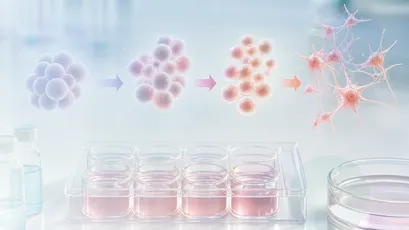
PGT Before IVF: What You Must Understand First
- IBaby IVF Team
- IVF , IVF with PGT
- 30 Jun, 2026
Core Answer
Before starting IVF with PGT, the key question is not simply whether you should do PGT. The better question is whether you actually need it and whether you are likely to have enough embryos for screening.
PGT can provide important genetic information before embryo transfer, but it is a screening and selection tool. It does not repair embryos, treat egg quality, or guarantee pregnancy. This article is best used as a consultation guide to help you ask clearer questions with your fertility team.
Why PGT Must Be Discussed Early
PGT stands for preimplantation genetic testing. In an IVF cycle, embryos are usually cultured to the blastocyst stage, a small biopsy is taken when appropriate, and the sample is sent for genetic testing before transfer decisions are made.
The benefit is clarity. PGT can help identify embryos with normal chromosome copy numbers, screen for a known single-gene condition, or assess embryos when a structural chromosome rearrangement is present.
The trade-off is embryo resource. If a patient only has one or two embryos, testing may leave no embryo available for transfer, either because no embryo reaches the testing stage or because the report does not identify a transferable embryo. That does not mean PGT is wrong for low-embryo cycles, but it means the decision should be made before stimulation starts.
Who May Be a Better Candidate
PGT is more commonly discussed in these situations:
- Maternal age over 35, because chromosomal error risk rises with age.
- Recurrent pregnancy loss, especially when chromosome factors are suspected.
- Repeated embryo transfer failure after reasonable-quality embryos.
- A known family history of a single-gene disorder.
- A balanced translocation or other structural chromosome rearrangement in either partner.
For younger patients with strong ovarian reserve and no genetic risk factors, routine PGT-A may not always add value. The decision should be individualized rather than treated as an automatic upgrade.
PGT Types to Understand
PGT-A screens for embryo chromosome copy-number abnormalities. The report is often described with terms such as euploid, mosaic, and aneuploid.
PGT-M is used when there is a known single-gene condition in the family. It requires preparation before the IVF cycle because the lab needs to know exactly what variant is being tested.
PGT-SR is used when a parent carries a structural chromosome rearrangement, such as a balanced translocation. The goal is to reduce the risk of transferring embryos with unbalanced chromosome material.
Questions to Ask Before You Start
Ask these before committing to IVF with PGT:
- What is the medical reason for recommending PGT in my case?
- Are we discussing PGT-A, PGT-M, PGT-SR, or a combination?
- How many blastocysts might realistically be available for testing?
- What happens if the cycle produces no transferable embryo?
- How will mosaic embryos be handled by this clinic?
The most useful PGT conversation is not “Can we test?” It is “How will the result change our plan?”
Common Misunderstandings
PGT is not a success-rate guarantee. It may improve embryo selection in selected situations, but implantation also depends on embryo biology, uterine readiness, transfer technique, and many patient-specific factors.
Embryo grade is not the same as chromosome status. A visually high-grade embryo can still be abnormal, and a lower-grade euploid embryo may still be worth discussing.
More testing does not always mean a better plan. When embryo number is limited, the family and care team should agree in advance on whether testing, fresh transfer, freezing, or another retrieval cycle is the most reasonable next step.